
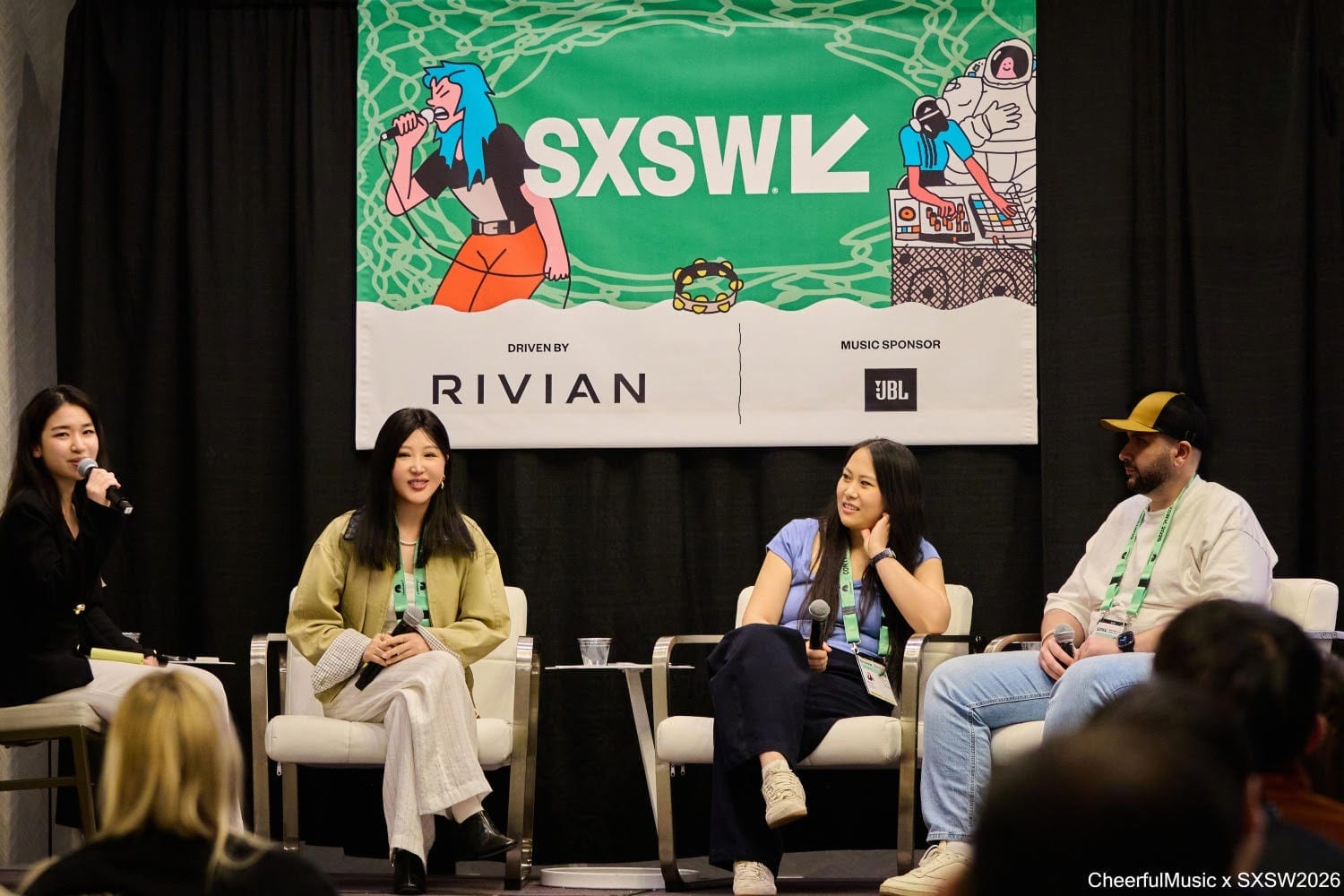
Acclaimed record label Cheerful Music recently took part in a key panel discussion at renowned festival and conference SXSW in Austin, Texas. Founded by industry thought leader and singer-songwriter turned entrepreneur Snow. J, the label has built a reputation for bridging the Chinese music market with the West. Their participation in the East x West: Cross Cultural AI Trends In Music Production panel on March 16 was also highlighted by Rolling Stone UK, underscoring the growing global interest in their work.
The panel drew strong attention from international music professionals looking to better understand the Chinese music landscape in the age of artificial intelligence. As the global industry accelerates through rapid AI innovation, China stands out as one of the most dynamic environments for its application. From AI-generated artists performing R&B behind digital interfaces to the scaling of music production at unprecedented levels, the conversation turned toward deeper questions of meaning, value, and the role of human artistry in an increasingly automated ecosystem.
Joining Snow. J on the panel were Vivian Wei, Vice President of Copyrights at NetEase Music, and international electronic artist MKJ. Together, they explored cross-cultural collaboration, the evolution of music creation, and the shifting foundations of the global industry.
The discussion opened with a look at the current state of AI-driven music in China. Vivian Wei highlighted how AI has dramatically lowered barriers to entry, resulting in a surge of content across platforms. Despite this explosion in output, truly impactful breakout hits remain limited, revealing a gap between volume and cultural resonance. While AI-generated music continues to grow, it is still in an early phase where scale does not necessarily translate to lasting success.
Offering Cheerful Music’s perspective, Snow. J emphasized a measured and intentional approach. Rather than producing fully AI-generated tracks, the label focuses on AI-assisted reinterpretations and the development of its virtual artist 灵玥 Lynn. At its core, the company remains rooted in Chinese traditional music, prioritizing cultural depth and artistic identity. MKJ echoed the sentiment that AI will not replace artists, stressing that originality and consistent quality will always rise above an oversaturated landscape. He also pointed to the need for balance, ensuring AI serves as a tool without diminishing the value or income of human creators.

The panel then examined whether AI has altered listening habits. According to Vivian Wei, audience preferences in China have remained largely stable over the past decade, with Mandopop and R&B—particularly emotional ballads—continuing to dominate. She noted that international artists aiming to enter the market should consider these core genres while also recognizing the importance of building a strong digital presence. In today’s social media-driven ecosystem, success depends not only on music production but also on consistent audience engagement.
Drawing from firsthand experience, Snow. J shared insights from a cross-genre collaboration with MKJ that fused Afrobeats with traditional Chinese elements. The track’s strong performance offered a compelling blueprint for cross-cultural success, though she acknowledged that AI-generated music still faces challenges, particularly around copyright disputes and commercial viability.
Copyright and royalties emerged as a central topic. Vivian Wei explained that NetEase Music currently allows AI creators to earn royalties, but enforcement against infringement remains strict. She advocated for future frameworks that reflect the level of human contribution within a track, emphasizing the importance of fairness and transparency. Both Snow. J and MKJ noted the urgency of developing clearer regulatory standards, with MKJ cautioning against overreliance on AI and the potential erosion of artistic integrity.
Looking ahead, the panelists agreed that AI will play a significant role in shaping the future of music, but not at the expense of human creativity. Vivian Wei emphasized that live performance remains the most powerful and irreplaceable form of musical expression, while Snow. J offered a defining takeaway: “The faster AI develops, the more valuable human-created music becomes.”

For Cheerful Music, the path forward is clear. The label will continue to invest in original music, traditional instrumentation, and international songwriting collaborations, while integrating AI as a tool to enhance—not replace—the creative process. In a landscape increasingly saturated with automated output, human artistry, storytelling, and emotional connection are positioned to become the industry’s most valuable assets.
As the discussion concluded, one message stood out: AI is not an adversary, but a powerful tool. With the right balance, it can expand creative possibilities while preserving the essence of what makes music meaningful. Cheerful Music remains committed to that vision, ensuring that as technology evolves, the heart of music stays human.
Cheerful Music: Website – Instagram – Facebook – TikTok